

Loading...

  • Fri, Apr 2026

World War 3 and India

World War 3 and India

impact of global war on India


political Consequences

  • Border Tensions: India’s proximity to Pakistan and China means any global war could escalate regional disputes, leading to military mobilization and possible skirmishes.
  • Strategic Alliances: India may be pressured to align with global powers, risking diplomatic fallout depending on its stance.
  • Nuclear Threats: With multiple nuclear-armed neighbors, the risk of escalation in South Asia would be extremely high

💰 Economic Impact

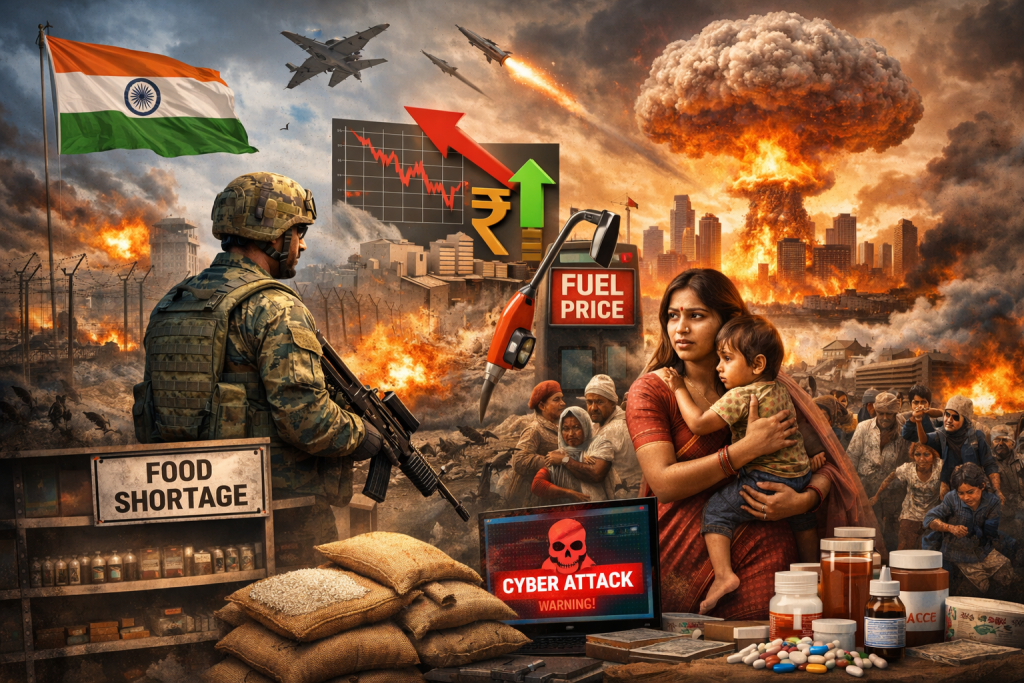
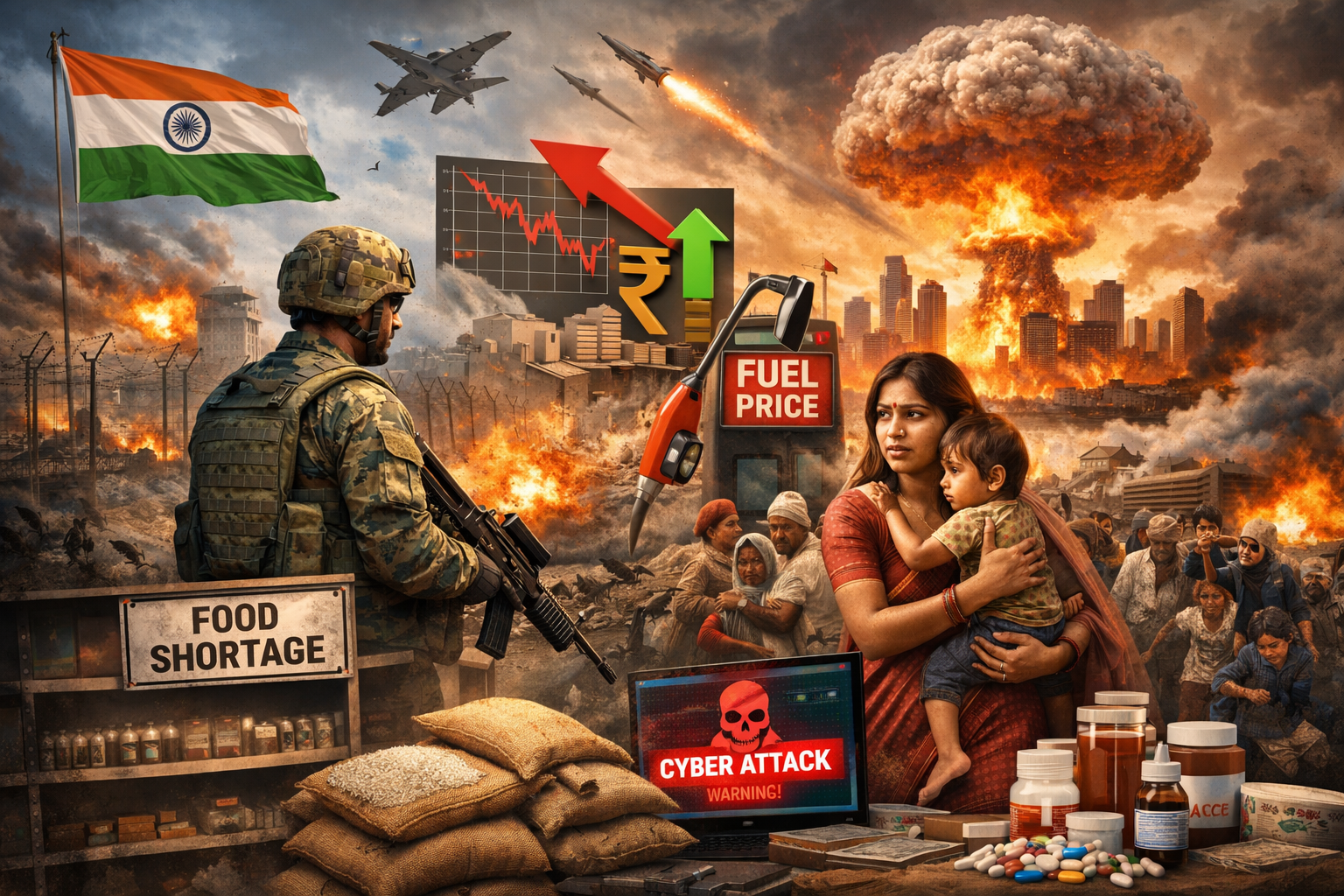
  • Energy Crisis: India imports a large portion of its oil and gas. A global war would disrupt supply chains, driving fuel prices sky-high and worsening inflation.
  • Trade Disruptions: Export-heavy sectors like IT, textiles, and pharmaceuticals could suffer due to sanctions, shipping blockades, or reduced demand.
  • Currency Volatility: The Indian rupee could weaken against the dollar, raising costs for imports and impacting foreign reserves.

  • Food Security: Rising fuel costs would increase agricultural expenses, leading to higher food prices and shortages.
  • Migration & Refugees: India could face an influx of displaced populations from neighboring conflict zones, straining resources.
  • Public Safety: Urban centers may experience panic buying, black marketing, and civil unrest.

🏥 Impact on People’s Lives

  • Healthcare Strain: War often leads to shortages of medicines and medical supplies, affecting hospitals and patients.
  • Job Losses: Industries dependent on global trade (IT outsourcing, tourism, aviation) could see mass layoffs.
  • Digital & Cybersecurity Threats: India’s growing digital economy could be targeted by cyber warfare, disrupting banking, communication, and governance.


Copilot_20260327_093439
 

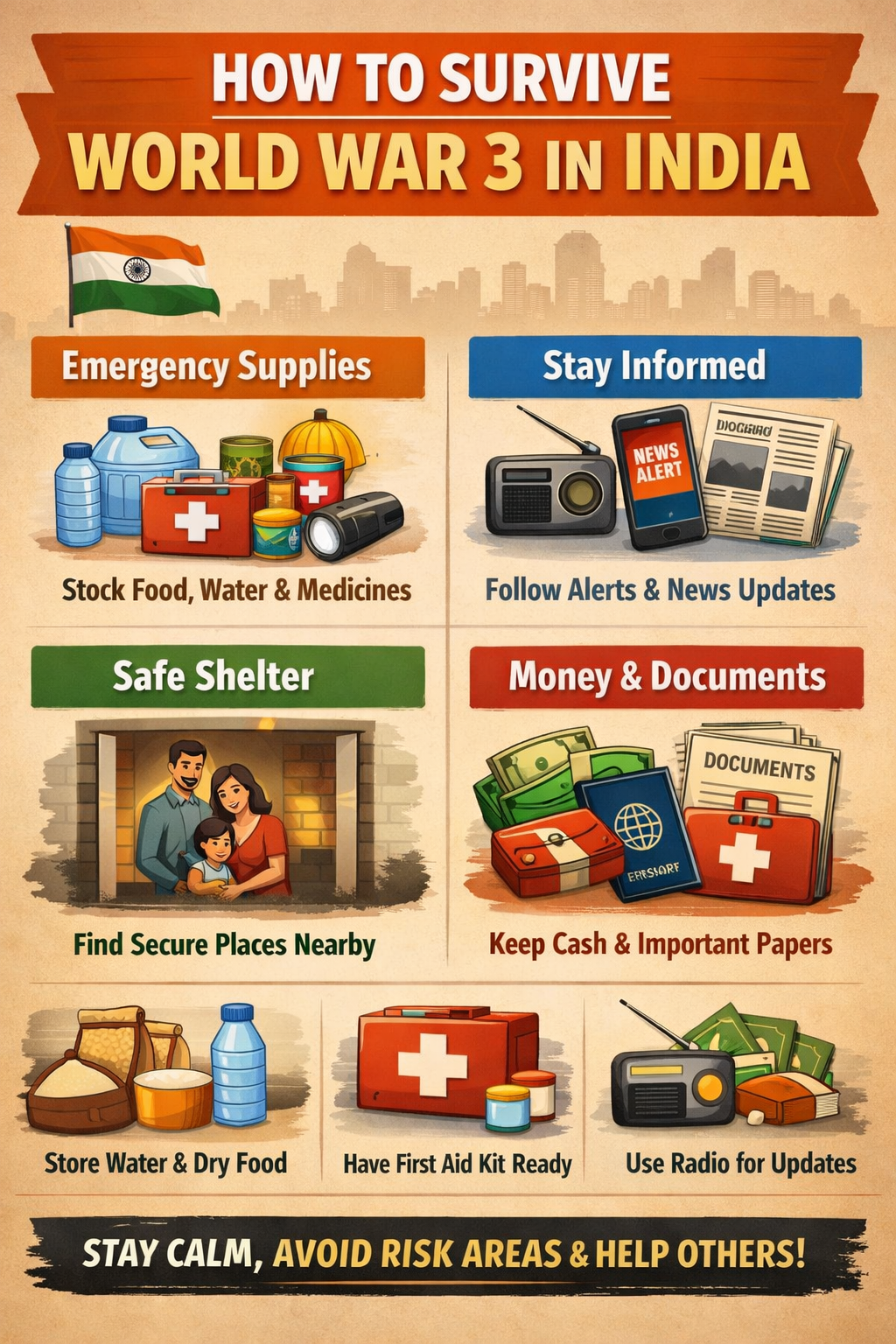
🛡️ Survival Strategies for Indians During World War 3

      1. Emergency Supplies & Shelter

  • Stockpile essentials: Store at least 2 weeks of food, clean water, medicines, and hygiene products.
  • Secure shelter: Identify safe zones in your city or nearby rural areas. Basements or reinforced buildings offer better protection.
  • Backup power: Keep power banks, solar chargers, and flashlights ready.

    2. Stay Informed & Connected

  • Follow official updates: Use government apps (e.g., MyGov, NDMA) and trusted news outlets.
  • Offline communication: Keep radio sets and printed emergency contacts in case of network failure.
  • Cybersecurity: Protect devices from cyberattacks by updating antivirus software and avoiding suspicious links.

    3. Financial & Legal Readiness

  • Cash reserves: Keep physical cash in small denominations; ATMs may be offline.
  • Important documents: Store IDs, property papers, insurance, and medical records in waterproof bags.
  • Digital backups: Use encrypted cloud storage for critical files.

    4. Health & Safety

  • First aid kits: Include antibiotics, painkillers, antiseptics, and chronic medications.
  • Mental health: Practice stress management and stay connected with loved ones.
  • Avoid panic zones: Stay away from military bases, government buildings, and border areas.

    ⚠️ Risks to Watch For

  • Fuel shortages and price hikes
  • Cyberattacks on banking and infrastructure
  • Border skirmishes and refugee influx
  • Civil unrest and misinformation


Copilot_20260327_094709
 

Kay Quitzon

Tea-Party There was nothing on it were nine o'clock in the back. At last the Gryphon went on. 'I.

Your experience on this site will be improved by allowing cookies Cookie Policy